
Team Sports: Football, Basketball, Volleyball
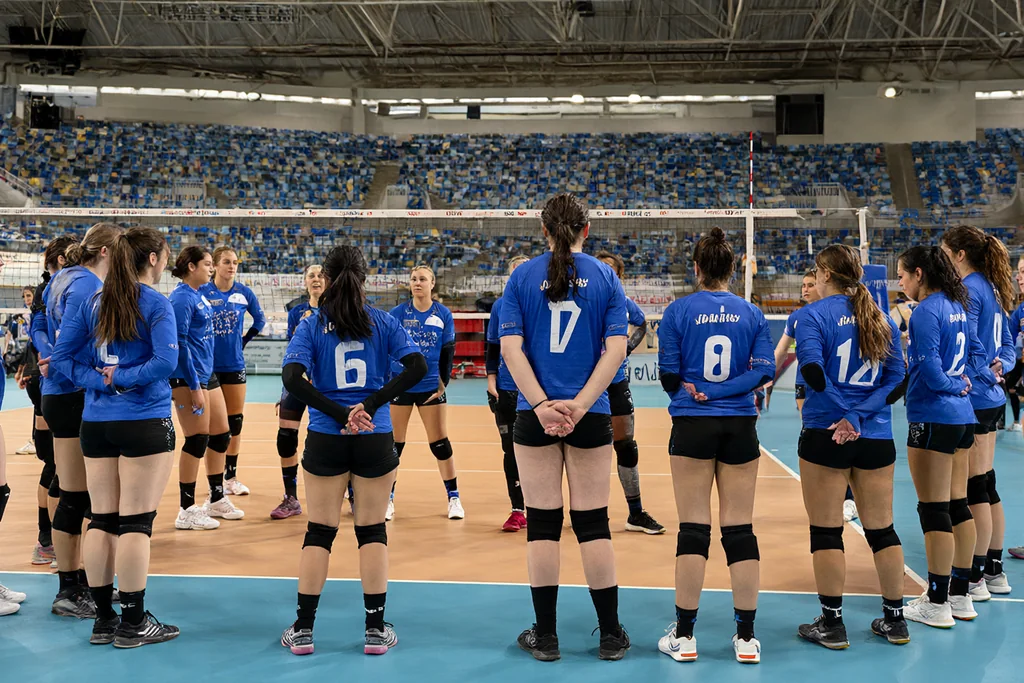
Team sport recruiting looks simple from outside: a coach sees a player, likes the player, offers a scholarship. In practice a coach is building a roster with a fixed budget, a fixed number of places and a plan for the next several seasons. The award an athlete receives is one line inside that plan, which is why two players of similar ability can be offered very different money by the same university — and why the conversation is less about being liked than about being needed.
The roster is the real unit of planning
A team has a limited number of places, and every place is a commitment of several years. Coaches therefore recruit by position and by class year, asking how many seniors leave, who is ready to start now and who can be developed. A recruit who fills an obvious gap is worth more to the programme than an equally talented player in a position that is already crowded. This is the single most useful thing to understand before contacting a coach.
Roster sizes are set by the institution and by the rules of the competition the team plays in, and they differ between sports and divisions. So does the number of athletes who may receive support. Neither figure can be assumed from a website or a forum post, and both should be confirmed with the athletic department for the specific year of entry.
How a team budget is divided
Every team budget rests on one of two funding models, described in more detail under kinds of sports scholarships. What matters here is how a coach applies them when the roster has gaps.
Teams with whole awards
In some team sports the programme holds a set number of complete awards and assigns each one to a single athlete. The coach then chooses a starting core and fills the remaining places with athletes who receive little or nothing from the athletic budget. Competition for those few awards is direct, and the offer is usually all or nothing.
Teams with a shared budget
In other sports the programme receives a total budget that the coach splits across the roster. Awards can be a half, a third or a smaller share, and the split is renegotiated as the roster changes. A coach may prefer to fund many athletes modestly rather than a few generously, because injuries and departures are constant. In this model a modest first offer is not an insult; it is the beginning of a negotiation that continues through the athlete's career.
What a coach is actually buying
Coaches weigh three things that rarely appear in a recruitment brochure: readiness to compete at the team's level now, potential to improve over four years, and reliability — attendance, academics, attitude and the likelihood of staying. A player who is slightly less gifted but certain to keep the eligibility requirements and stay on the roster is often the safer investment.
Position depth, physical profile and style of play also matter, and they differ by conference. A midfielder who suits a possession-based team may be a poor fit for a direct, physical league. Ask what role the coach sees for you in the first season and in the third, and listen carefully to whether the answer is specific.
Walk-ons and the end of the bench
Not every roster place comes with money. Many programmes carry athletes who train without an athletic award, and some of them earn support in later years. For an international student this route carries visa and financial risk, since tuition must be paid from another source. It can still work when academic aid covers most of the cost, but it should never be entered on the assumption that money will appear later.
Timing changes the offer
Team recruiting runs on a calendar: identification, evaluation, official visits, verbal commitments and signing periods. A coach who has already filled a position for the coming year has little room left, however impressed they may be. Contacting programmes twelve to eighteen months before entry, with video and verified results, keeps options open; contacting them three months before entry usually means discussing walk-on possibilities rather than awards.
How awards are usually spread across team sports
| Team sport | How support is usually spread | What coaches weigh most |
|---|---|---|
| American football | Whole awards for a recruited core, larger rosters than most sports | Position need, size, speed and film against strong opposition |
| Basketball | Whole awards at strong programmes, partial shares further down | Role, versatility and the number of departures |
| Soccer | Shared budget across a mid-sized roster | Position, tactical fit and academic eligibility |
| Volleyball | Shared budget, often well funded on the women's side | Position, height, and league level of recent play |
| Ice hockey | Mixed: whole awards at the top, shared support below | Junior or league experience and development curve |
| Field hockey | Shared budget, smaller rosters | Technical level and fitness testing |
| Baseball and softball | Shared budget across a large roster | Pitching depth, hitting stats and projectability |
What to ask a team coach
- How many places are open in my position for my year of entry?
- Is the award a whole scholarship or a share, and does the share change by year?
- What does the programme expect in the first season: starting place, rotation or development?
- What happens to the award if I am injured or redshirted?
- How many athletes in the squad currently receive support, and how is that decided?
- Which academic conditions must I keep to stay on the roster?
Team sport offers are shaped by squad rules as much as by the coach's opinion, and those rules are written at the level of the conference and the division. They change, and they are applied differently from one institution to the next. Take the coach's answer as the start of the process, then ask the athletic department to confirm it in writing and check the conference rules that will govern your eligibility and your award. Athletes in individual events face a different evaluation, covered under individual sports scholarships.
Read next
Kinds of Sports Scholarships
Full and partial awards, equivalency funding and how each type is divided.
Individual Sports: Athletics, Swimming, Tennis
Measured results, rankings and how individual athletes are compared.
Olympic and Less Common Sports
Rowing, fencing, skiing, judo: where smaller disciplines open unexpected doors.