
Individual Sports: Athletics, Swimming, Tennis
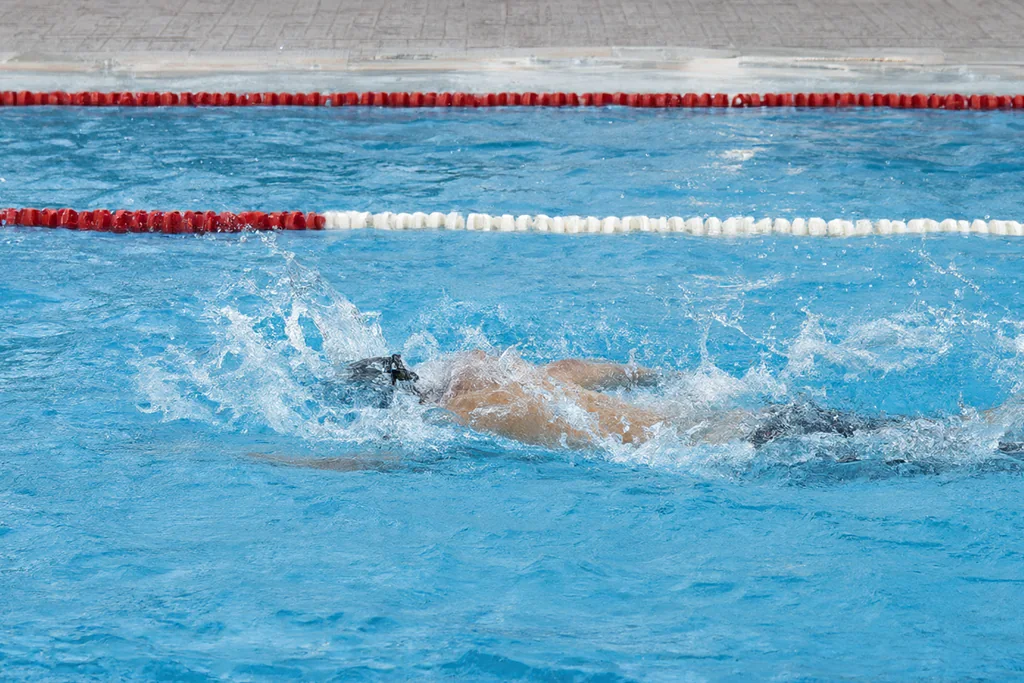
Individual sports — athletics, swimming, tennis, golf, gymnastics, fencing, judo — recruit on evidence rather than on impression. There is no team system to fit into and no rotation to earn; there is a number, a ranking or a result, and a coach comparing it against a standard. That makes the process more transparent than team recruiting, and less forgiving: an athlete whose results are not documented is, for practical purposes, invisible.
Why individual sports are assessed differently
A team coach recruits for a gap in a line-up. An individual sport coach recruits for a training group and a competition squad, and the question is whether the athlete can score at the level the programme competes at. Because the athlete competes alone, the evaluation rests on measurable output and on the level of the field it was produced against. A personal best set in a weak field says less than a mid-table finish in a strong one, and coaches know the difference.
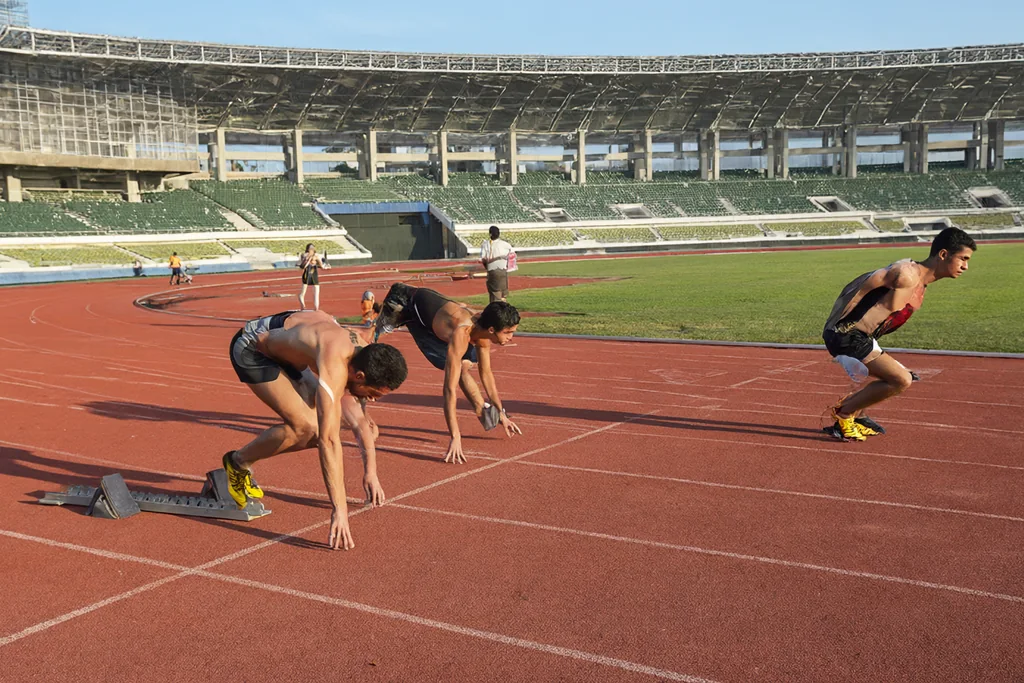
Squad sizes in individual sports are often larger than outsiders expect, and support is frequently shared rather than given whole. That is the same logic described in team sports scholarships, applied to a roster built from several event groups.
Rankings: what they measure and what they hide
National rankings
A national ranking is the most portable document an athlete can carry, because it places results in a hierarchy that a foreign coach can read quickly. Its value depends entirely on the depth of the country: a high rank in a small federation may correspond to a modest international level, while a lower rank in a deep one may be worth more. Coaches generally ask for the ranking together with the results behind it.
International rankings and rating systems
Where an international federation publishes a ranking or a rating, that number travels well. It is also the number most likely to be checked, so it must be current and must correspond to the athlete's own record. Discrepancies between a claimed ranking and the federation's published list are one of the fastest ways to lose a coach's interest.
The tournament calendar is the audition
In individual sports the competitive calendar performs the function that film performs in team sports. Coaches follow national championships, junior circuits, university leagues and open meets, and they often hear about athletes from other coaches rather than from the athletes themselves. Planning a season means planning which events will be seen: a national championship in front of selectors is worth more than several low-profile wins.
Results should be collected as they happen — start lists, official results, federation pages, video of full attempts rather than edited highlights. Reconstructing a season two years later is difficult, and a coach who cannot verify a result will usually discount it.
Times, marks and other measurable evidence
Swimming, athletics and weightlifting are the easiest sports to evaluate, because the result is a number produced under standard conditions. Coaches convert times and marks into points, compare them across seasons and look at the trend: an athlete improving steadily is often preferred to one who peaked early.
Technical sports such as tennis, golf, gymnastics and fencing are scored differently, through ranking points, tournament results and observation of technique. Here video matters more, and so does the level of the opponent. A coach watching a match is judging decisions, movement and temperament as much as the scoreline.
Comparing athletes from different systems
Two juniors with the same national rank may be far apart in real level, and coaches compensate by asking for context: the size of the country, the strength of the junior circuit, results in international events and, where possible, head-to-head meetings. An athlete can help by supplying that context unprompted — a short note on what the national title means in their country is worth more than another trophy photograph.
Where each sport usually looks for evidence
| Sport | Primary evidence | Secondary evidence | Who verifies it |
|---|---|---|---|
| Athletics | Official marks per event, season by season | Placing at national championships | National federation results archive |
| Swimming | Long-course times in each stroke | Relay splits and consistency across meets | Federation or meet organiser |
| Tennis | International ranking and tournament results | Video of matches against ranked opponents | National or international tennis body |
| Golf | Scoring average and tournament finishes | Course difficulty and field strength | National golf federation |
| Gymnastics | All-around and apparatus scores at sanctioned meets | Video of full routines, difficulty values | National federation judging records |
| Fencing | Ranking points from sanctioned events | Direct-elimination results and video | National fencing federation |
| Rowing | Ergometer scores and boat results | Testing results at national camps | Federation or club coach |
The year before you apply
- Fix the competition calendar around events where selectors and coaches are present.
- Keep a single folder of official results, start lists and federation confirmations.
- Record full performances on video, from a stable angle, with the scoreboard visible.
- Ask your federation for a ranking letter or a results summary in English.
- Track the trend, not only the best result: coaches read improvement.
- Prepare an academic file in parallel, since the eligibility requirements are checked separately from sporting results.
The advantage of an individual sport is that the case can be made with documents. The disadvantage is that nobody will make it for you: there is no coach scouting your league on your behalf. Build the file early, keep it verifiable, and remember that ranking systems, qualifying standards and squad rules are set by federations and institutions and revised regularly — confirm the current version with the body that publishes it before you rely on any threshold. Sports outside the main collegiate circuit, where a federation often carries the cost of training, follow their own route: see Olympic and less common sports.
Read next
Kinds of Sports Scholarships
Full and partial awards, equivalency funding and how each type is divided.
Team Sports: Football, Basketball, Volleyball
Why team sport recruiting is the most visible and the most competitive.
Olympic and Less Common Sports
Rowing, fencing, skiing, judo: where smaller disciplines open unexpected doors.