
Life After Sport: Education as a Safety Net
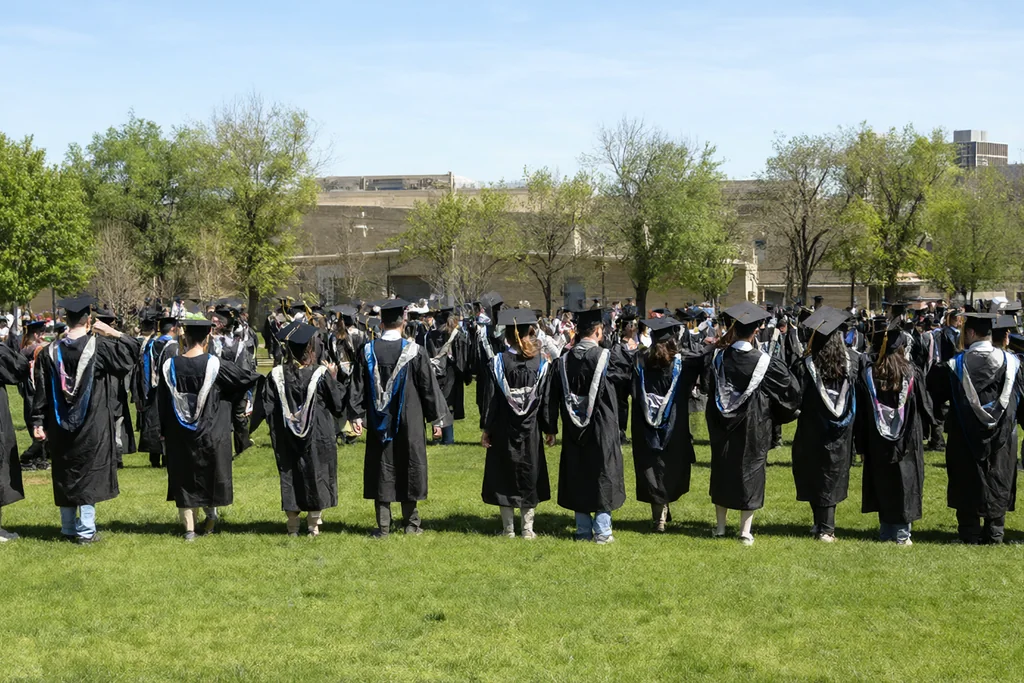
Every athletic career ends, and for most athletes it ends earlier than the person expected. A scholarship makes that ending visible in advance: the funding has a term, eligibility has a limit, and the graduation date is written down from the first semester. That is not a threat. It is an advantage, because a transition with a date attached can be planned instead of suffered.
The exit begins before the last season
The common mistake is to treat the final year as the moment to start thinking about what comes next. By then the calendar is full, paperwork is moving and there is no attention left for a decision. The productive window is the year before, when it is still possible to add a course, arrange an internship, speak to a careers service or test a coaching qualification. Twelve months later the same options exist, but they cost far more energy.

What the scholarship was actually paying for
A sports scholarship is described in sporting language, but its formal content is academic: a place on a degree programme, a fee arrangement and a set of support services. Sport is the reason the place was offered; the degree is what remains when the sport stops. This is the practical side of what a scholarship changes, and it is worth reading alongside the wider effects of scholarship funding.
It also explains why the academic threshold in a scholarship contract matters more than it appears to. Renewal usually depends on credits, not only on performance, and a course dropped quietly in the second year can remove the fourth.
A timeline for the transition
| Stage | What changes | What helps |
|---|---|---|
| Two years out | The end becomes visible while the body still feels fine | Add a course or internship and open a careers conversation |
| Final season | Competition load peaks and emotions run high | Protect the degree and check deadlines early |
| Last months | Training stops and the daily structure disappears | Keep a fixed morning routine and somewhere to be |
| First semester after | Free time appears and feels strange rather than restful | Use the university careers service straight away |
| First year after | Identity settles, comparison with former teammates continues | Choose the next challenge deliberately, sporting or not |
The identity question
"I am a swimmer" describes a role, not a whole person, but for years that role is rewarded with attention, structure and a clear answer to the question "what do you do?". When competition ends, the answer disappears before a replacement exists. Athletes often describe that gap as harder than the loss of training itself, because the body recovers faster than the label does.
Keeping a foot in the sport
Coaching, officiating, club administration or volunteering with younger squads keeps the language and the network without requiring the full identity. For many former athletes a part-time role of this kind is the difference between leaving the sport and being pushed out of it. It also keeps a professional network alive at exactly the moment when one is needed.
Skills that transfer
The useful argument in an interview is not that sport builds character, but that it produces specific, checkable habits.
- Planning a season: the same logic as planning a project with fixed deadlines and one unavoidable peak.
- Receiving feedback on a weekly basis without treating it as a verdict on the self.
- Working inside a team chosen by someone else, including with people you would not have picked.
- Delivering under fatigue, when the conditions are poor and the result still counts.
- Handling a public result — a loss, a selection, a ranking — and turning up the next morning.
- Recovering from a setback that is nobody's fault and nobody's decision.
These belong in a CV as outcomes rather than as sport. "Managed a weekly schedule of training, travel and a full course load for three years" reads differently from "played basketball", and the second version is what most former athletes write.
University, work, or both
The transition does not have to choose between the two. A degree taken while competing already proves the ability to hold two commitments at once, and many employers value a candidate who finished something difficult on a schedule. The risk is the opposite one: taking the first available job because it feels like progress, then discovering at thirty that the qualification needed for the interesting work was never started.
Studying further is not automatically the safer route either. What matters is that the next step is chosen rather than accepted, and that the study load is realistic — the same calculation that made the scholarship years work, described in balancing school and sport.
The first year without competition
The first year is usually the hardest, and it is rarely dramatic. There is no injury, no farewell ceremony, just a Tuesday with nothing scheduled and a body that still expects a session. Former athletes describe restlessness, a lowered tolerance for ordinary stress, and a strange guilt about free evenings.
Two things help. The first is a replacement structure — not necessarily sport, but something with fixed times and other people waiting for you. The second is permission to be ordinary for a while. A career built on measurable progress does not prepare anyone for a year in which progress is invisible, and that discomfort is a normal stage rather than evidence of a mistake.
If the years of competition left a pattern of pressure that has not faded, that is worth addressing separately rather than carrying into the next chapter — the signs are described in pressure and burnout. Sport ends on a date. The habits it built do not, and choosing which ones to keep is the real work of the transition.
Read next
The Influence of Sports Scholarships
What changes for an athlete and a family once a scholarship is awarded.
Balancing School and Sport
Timetables, travel, missed classes and the support services that help athletes cope.
Pressure, Burnout and Mental Health
How high training loads and constant evaluation affect athletes and where to find help.