
Sports Scholarships in Europe
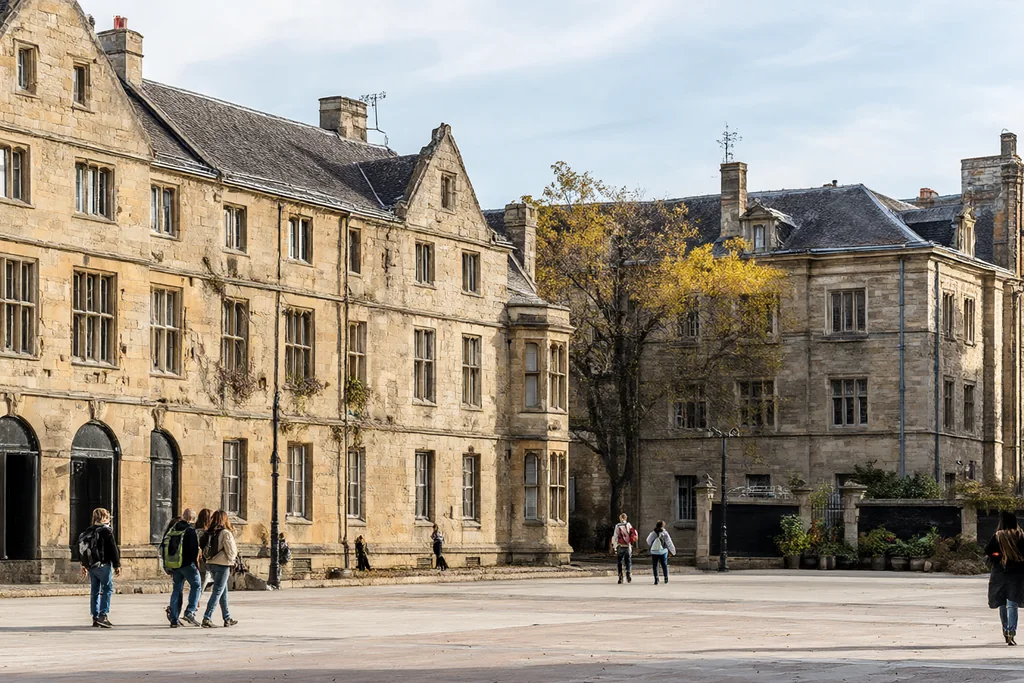
Sport in European universities works differently from the American model. There is rarely a single national recruitment market, competitions are often organised by federations rather than by universities, and funding arrives from several directions at once. What Europe offers instead is variety: a dense network of institutions, short travel distances, affordable or free tuition in many countries, and a growing culture of dual careers. For a student-athlete this can be an excellent fit, provided the expectations are set correctly from the start.
Why the European picture looks fragmented
Each country organises university sport through its own institutions: ministries, sports institutes, national federations, regional governments and the universities themselves. Some countries treat elite sport as a public task and fund it directly. Others rely on clubs and on the family. Because education policy is national, no single application procedure covers the whole continent, and a family comparing two neighbours may find almost nothing in common between their procedures.

This fragmentation is inconvenient, but it also creates openings. An athlete who does not fit one country's selection system may fit another's perfectly, simply because the criteria are built on different assumptions.
Dual career agreements
The most characteristic European instrument is the dual career agreement. Its purpose is to let an athlete study and train without choosing between the two. In practice this can mean flexible attendance, individual exam schedules, additional study years, tutoring or a reduced course load during competition periods. Some universities appoint a contact person for student-athletes; others handle requests case by case.
These arrangements are negotiated rather than automatic. An athlete usually has to declare the sporting commitment, provide evidence from a federation and request adjustments before the semester begins. Asking late is the most common reason such support is refused.
Where the money comes from
European support is rarely called a scholarship in the American sense. It is more often a combination of instruments. National federations fund selected athletes. Sports institutes provide coaching, medicine and training facilities. Universities waive or reduce fees. Regional authorities add grants. Clubs contribute equipment and travel.
Because the sources are separate, each with its own conditions, an athlete may hold several forms of support at once. That is both an advantage and a risk: losing selection in one programme does not necessarily collapse the whole plan, but it does require renegotiating the rest.
Practical differences to expect
- Competition is organised mainly through clubs and federations, not through universities.
- Entry to study is decided by academic criteria, and sporting merit is rarely a substitute.
- Language requirements are enforced by the institution, and they are not negotiable.
- Tuition may be low, but living costs vary enormously between cities.
- Support for athletes is often negotiated individually rather than published in a table.
- Deadlines differ by country and sometimes by region within the same country.
Comparing the European routes
| Route | Who provides support | Typical form | What to verify |
|---|---|---|---|
| National federation pathway | Federation or sports institute | Coaching, medicine, stipend for selected athletes | Selection criteria and the review date |
| University support | The institution | Flexible study plan, tutoring, fee reduction | Whether a formal dual career status exists |
| Regional or municipal grants | Local authorities | Grants for training, travel and equipment | Eligibility rules and the application window |
| Club-based development | Sports clubs and sponsors | Training and competition, sometimes paid | Whether payments affect amateur status elsewhere |
The amateur status question
One detail deserves particular attention. Accepting money, signing a professional form or playing in a league with salaried players can affect eligibility in other countries. A route that works perfectly inside Europe may create problems for an athlete who later wants to study elsewhere. Anyone planning to keep that option open should check the amateur rules of the destination country before accepting any payment.
How to plan a European application
Start with the study programme, not with the sport. In Europe the academic decision usually comes first, and the sporting environment is built around it. Identify two or three countries, check the language requirement, check the tuition and living costs, and then look at the level of competition nearby.
Then contact the institution directly: the international office for admission, and the sports service or the student-athlete contact for flexibility. Ask specific questions in writing and keep the replies. Finally, contact the relevant federation about the sporting pathway, because club structures and selection dates are published there and not on university websites.
Expectations worth keeping
Europe rewards patience. Support is often smaller and quieter than in the most visible scholarship systems, but the combination of a recognised degree, strong competition and low or moderate tuition can be an excellent outcome for the right athlete. The system will not chase the candidate, however. Nothing happens automatically, and every arrangement, from a flexible exam schedule to a regional grant, has to be requested by someone who knows it exists.
That is why information is the decisive advantage here. A family that reads the official pages of two or three institutions, writes to the right offices early and keeps a simple calendar of deadlines will usually do better than one that relies on general advice. Confirm each rule at the source, in writing, and revisit it every year: European procedures are stable, but they do change.
Read next
Countries With Sports Scholarships: An Overview
The main systems that fund student-athletes, how they are organised and what to compare.
College Sports in the United States
How the American college model works: divisions, eligibility centres and recruiting rules.
How to Choose a Country for Your Studies
Language, cost, competition level and study options: a decision checklist for families.