
Wimbledon 2026 Without Carlos Alcaraz: How The Title Race Has Changed
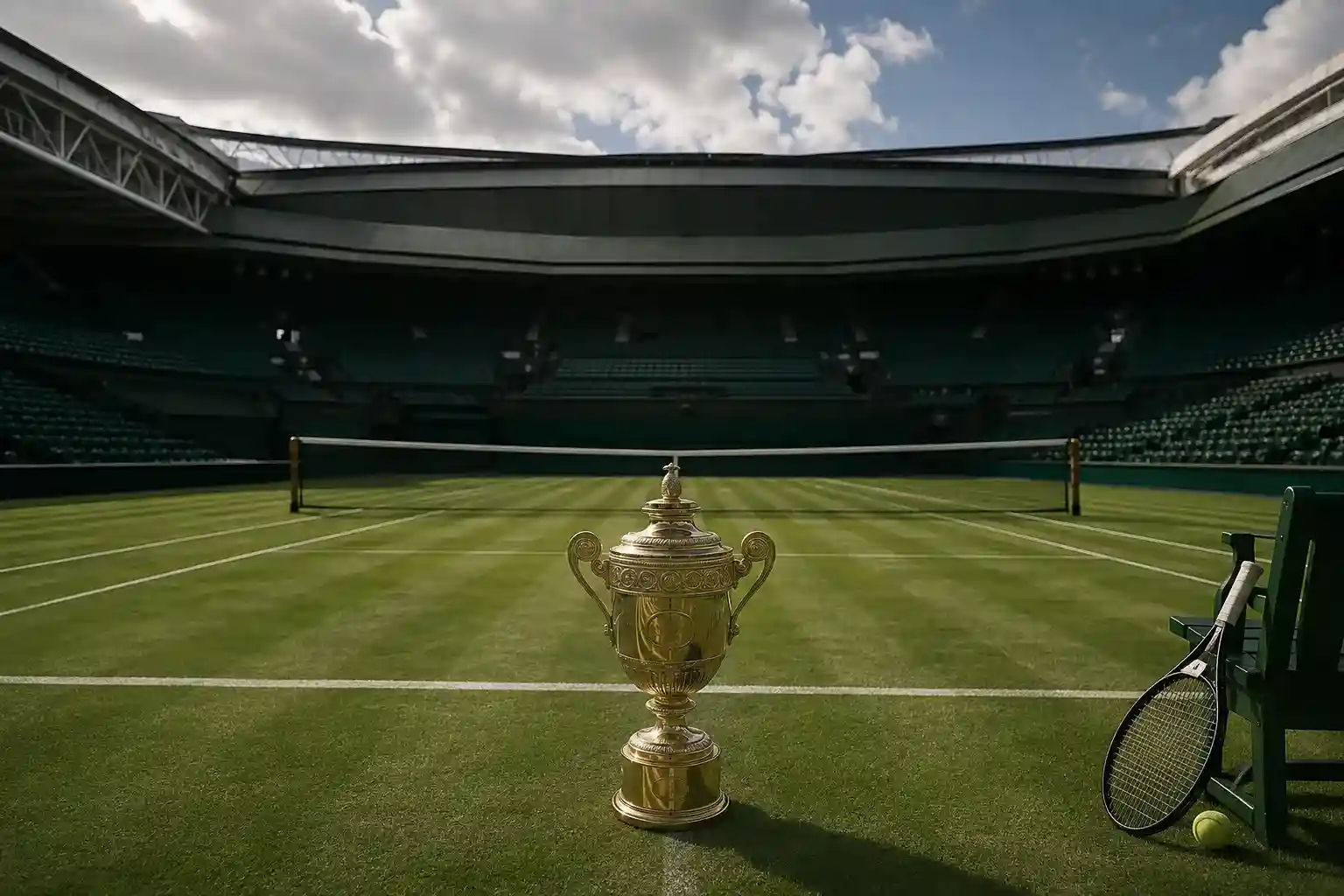
The shape of Wimbledon 2026 changed the moment Carlos Alcaraz dropped out. The Spaniard was not just another contender in the draw. He was the player who had come to define the recent championship story on grass: champion in 2023 and 2024, finalist again in 2025, and the man many opponents measured themselves against when the lawns of the All England Club came into view. His withdrawal because of a wrist injury removes the most explosive grass-court problem from the field and leaves the tournament without the player who, in recent seasons, blended fearlessness, speed, touch, and big-match nerve better than anyone else on this surface. Wimbledon officially lists the 2026 Championships for 29 June to 12 July, so his absence is not a distant idea now. It is the fact around which the whole men’s draw must reorganize itself.
That does not automatically make the tournament weaker. In some ways, it makes it more volatile and, for neutral viewers, more difficult to predict. Alcaraz often compressed the field because he could solve almost any style of opponent over best-of-five sets. He could outlast the pure baseliner, blunt the power hitter, expose the nervous newcomer, and go shot for shot with established champions. Remove that level of all-surface adaptability, and Wimbledon stops feeling like a tournament with one giant final hurdle. It becomes a competition with several believable pathways to the trophy. That is usually where tension grows. The question is no longer who can survive Carlos Alcaraz on Centre Court. The question is which player can handle a draw that now offers more hope, more pressure, and more tactical variety than it did before.
Why Alcaraz’s Absence Matters More At Wimbledon
Some top players can miss a major and still leave the structure of the event mostly intact. Alcaraz is not one of them, especially at Wimbledon. Grass amplifies his best qualities. His first step is elite, which helps him cover short balls and defend low skidding attacks. His forehand can punch through the court without requiring long preparation. His drop shot becomes even more dangerous because the ball stays low and the recovery distance is greater for opponents. At net, he is not simply competent; he is imaginative. He reads passing lanes early and has the hand skills to finish points in several ways. On grass, that range matters more than on any other surface.
There is also the psychological side. Alcaraz’s recent Wimbledon history gave him an aura few players could match. Even when he was not playing perfect tennis, opponents knew they had to live with pressure spikes, momentum swings, and a level of improvisation that could rip up a good game plan in two or three points. Wimbledon is full of matches decided by small stretches: one loose service game, one tentative tiebreak, one return game where belief fades. Alcaraz had become the player most likely to own those moments. That reputation alone changes a draw. With him out, several contenders can look at the bracket and feel something different from fear. They can feel opportunity.
His withdrawal also lands at a strange point in the 2026 season. The ATP rankings still show Alcaraz at No. 2, which tells you how high his baseline remains even without recent results. At the same time, the wider men’s tour has been unusually unstable in the weeks leading into grass. Jannik Sinner is still No. 1 by a large margin, but Roland-Garros turned chaotic, with Sinner losing early, Novak Djokovic going out to João Fonseca, and the Paris draw opening so dramatically that ATP described it as one of the most wide-open major tournaments in recent memory. That turbulence matters because Wimbledon usually rewards conviction. Right now, conviction is precisely what many top men are trying to recover.
So Alcaraz’s absence is not just the loss of a star. It is the removal of the one player who might have brought order to a messy pre-Wimbledon landscape. Without him, the championship feels less hierarchical. It becomes more dependent on timing, matchups, and grass-specific execution.
Jannik Sinner Becomes The Clear Reference Point
Whenever a dominant rival disappears, attention swings to the highest-ranked player still standing. In this case, that is Jannik Sinner. The ATP rankings place him well clear at No. 1, and even his disappointing Roland-Garros campaign does not erase the bigger picture of his season. Official tournament coverage noted that he arrived in Paris on a 30-match winning streak and an 18-match clay winning run that included Masters titles in Monte-Carlo, Madrid, and Rome. Those numbers matter because they show how much authority he has built on tour, even if the French Open ended badly.
From a tennis point of view, Sinner now sits in the position Alcaraz would have been trying to challenge. He is the standard-bearer. His ball striking is clean enough for grass, his return is one of the best in the sport, and he has already shown that he can go deep at Wimbledon. The official Wimbledon site’s 2025 archive also reflects that he won the title there last year, defeating Alcaraz in the final. That is significant because it means he is no longer being discussed as a brilliant hard-court player who is still learning the lawns. He has already crossed the final threshold at this event.
The challenge for Sinner is more subtle now. When Alcaraz is in the field, Sinner often operates with a sharp external target. The rivalry narrows his focus and gives the tournament a clear final boss. Without that obvious collision point, the pressure changes shape. He becomes the man everyone studies rather than the man chasing one specific rival. That can be uncomfortable at Wimbledon because the surface allows lower-ranked opponents to hit above their usual level for two hours and turn a match into a serving contest, a tiebreak contest, or a nerve contest. Grass does not always reward the best player in abstract terms. It rewards the player who handles compressed margins.
There is another layer here. Sinner’s Roland-Garros exit was not just an upset; it was a reminder that the tour’s top names are not entering Wimbledon with total certainty. He remains the most complete candidate, but he no longer arrives with the feeling of inevitability that a dominant clay campaign might have created if it had ended in Paris glory. In practical terms, he becomes the favorite, though not the unbeatable one. That distinction is the heart of this Wimbledon. Alcaraz out. Sinner first in line. Yet the gap between first in line and actual champion may be narrower than many expected a month ago.
The New Group Of Real Title Contenders
The most obvious beneficiary is Novak Djokovic, even after his Roland-Garros defeat. Writing him off at Wimbledon has rarely been a smart move, and it would be especially careless now. His loss to João Fonseca in Paris was dramatic, and ATP coverage called attention to the Brazilian’s fearless level and the near five-hour length of the match. But Wimbledon has always suited Djokovic’s competitive habits better than clay in the later stage of his career. The serve locations, the return position, the ability to shorten points when needed, the comfort on Centre Court, the experience in seven-match title runs — all of that still makes him dangerous. He may not be the automatic favorite anymore, yet in a draw without Alcaraz he feels closer to the center than to the edge.
Alexander Zverev also deserves more serious consideration than he sometimes gets on grass. He is ranked No. 3 in the ATP standings and has again gone deep at Roland-Garros, reaching the semifinals there. For years the main criticism has been that his movement and second-serve nerves can become vulnerable in the tightest moments, especially at majors. Still, the raw ingredients are there: a huge first serve, easy backhand pace, improved willingness to move forward, and enough experience to navigate the first week without drama. If the draw breaks right, Zverev has the tools to put himself in the last four, and once a Wimbledon semifinal begins, the conversation changes quickly.
Then there is the broad middle tier, which is where this tournament becomes especially interesting. Ben Shelton, Taylor Fritz, Alex de Minaur, Daniil Medvedev, Lorenzo Musetti, and the emerging wave led by João Fonseca and Jakub Mensik all have reasons to believe. Not all of them are natural Wimbledon favorites, but all have qualities that can become dangerous in a more open field. Shelton’s lefty serve can create scoreboard pressure from the first round onward. Fritz has the flat, efficient baseline game grass rewards. De Minaur can make life miserable for bigger hitters if conditions slow slightly. Mensik has already pushed into major conversation with his run to the Roland-Garros semifinals, while Fonseca’s win over Djokovic gave him a new level of credibility under the brightest lights.
Jack Draper belongs in this discussion too, though with caution. His ranking is much lower than his talent because his 2026 season has been disrupted by injuries, including withdrawals from Roland-Garros and the Australian swing. Even so, he remains one of the players opponents would rather avoid on grass, and ATP reported that he has brought Andy Murray into his team for the grass season. That does not guarantee a title charge, but it does suggest a serious attempt to sharpen his Wimbledon campaign. A healthy Draper can serve big, strike through the court from the left side, and feed off home support in a way few players can match.
A good way to understand the new landscape is to look at the main contenders as they stand right now.
Before the table, it is worth stressing that Wimbledon titles are not won by rankings alone. Grass compresses time, rewards decisive serving, and can magnify confidence very quickly. The list below reflects not just status, but the specific reasons each player’s route has become more realistic without Alcaraz in the draw.
| Player | Why He Matters Now | Main Question Mark |
|---|---|---|
| Jannik Sinner | World No. 1, reigning Wimbledon champion, elite returner, proven big-match player. | Can he reset quickly after the shock Roland-Garros exit? |
| Novak Djokovic | Huge Wimbledon pedigree, tactical mastery on grass, unmatched experience in late rounds. | Is his current level high enough over seven best-of-five matches? |
| Alexander Zverev | Top-three ranking, deep major experience, powerful serve that plays well on grass. | Can he stay calm in the tightest semifinal or final moments? |
| Jack Draper | Lefty serve, natural grass-court tools, home support, fresh coaching boost with Murray. | Health and match rhythm after repeated injury interruptions. |
| Taylor Fritz | Efficient first-strike tennis, comfort on quicker courts, dangerous in short points. | Can he beat multiple elite opponents back to back at a major? |
| Ben Shelton | Explosive lefty serve, high ceiling, improved confidence in big matches. | Return consistency and point construction on longer pressure exchanges. |
| Jakub Mensik | Rapid rise, big serve, Roland-Garros semifinal run shows major-stage belief. | Grass-court experience at the very top level. |
| João Fonseca | Fearless shot-making, proved he can handle attention after beating Djokovic in Paris. | Managing expectations over a full two-week Slam run. |
What stands out is how many names now feel plausible rather than decorative. In a normal year, several players enter Wimbledon with outside-chance labels that collapse the moment the bracket hardens. This time, the gap between contender and champion is thinner. Sinner still has the strongest case. Djokovic still has the most intimidating history. But the presence of Draper, Mensik, Fonseca, Fritz, and Shelton makes the event feel more layered. If the draw scatters these threats across different quarters, the second week could become much more chaotic than a simple No. 1 versus legend script.
Tactics, Matchups, And The Kind Of Tennis That Could Decide The Title
Without Alcaraz, the likely title-winning formula changes a little. His ability to win in multiple styles often forced the rest of the field into reactive thinking. Against him, players worried about whether to shorten points, test his forehand, drag him wide, or keep him away from the forecourt. Now the tactical picture is less about surviving the most complete grass-court athlete and more about imposing one reliable pattern often enough.
That gives extra value to players whose game starts with the serve. Grass is still the surface where free points matter most. The best contenders will not just hold; they will hold quickly, keeping energy for return games and preserving mental calm in tiebreak-heavy matches. Sinner’s edge here is not just pace but precision in the opening two shots. Djokovic’s edge is disguise and return pressure. Zverev’s is height and raw first-serve damage. Draper and Shelton can make even strong returners feel rushed because the lefty angle immediately changes the geometry of the point.
There are a few qualities that may matter more than usual in this version of Wimbledon:
• A first serve that can protect shaky patches.
• A return game strong enough to create one break in a set.
• Calm in tiebreaks and 4-4 service games.
• Willingness to finish points at net.
• The physical freshness to handle sudden momentum swings.
That combination points back toward Sinner and Djokovic as the most rounded options, but it also explains why dangerous outsiders are more believable than before. Players do not need to solve Alcaraz’s variety anymore. They need to win six or seven matches in a field where many rivals still have one notable flaw.
This is why Wimbledon 2026 may produce a champion whose route is defined less by brilliance across every area and more by discipline in a few key ones. A player who serves at 68 to 70 percent, avoids emotional dips, and plays clean tiebreak tennis could go very far. Grass sometimes rewards genius, but it often rewards repeatable habits. Alcaraz tends to bring both. Without him, the draw becomes a contest between the complete players and the players with one dominant weapon.
Why The Tournament Now Feels More Open, But Not Random
It is tempting to say that Alcaraz’s withdrawal blows the tournament wide open and leaves everything to chance. That is too simple. Wimbledon is more open now, but not random. Certain players still fit the event better than others. Sinner has the ranking, the recent title, and the technical profile. Djokovic has the court sense and history. Zverev has become too consistent at majors to ignore. The younger disruptors have enough momentum to hurt anyone. So the field has loosened, but it has not lost shape.
The deeper shift is emotional. Alcaraz’s absence changes how contenders think about possibility. A title can seem closer the moment one dominant opponent disappears, and that new possibility can help or hurt. For some, it sharpens ambition. For others, it introduces a pressure they are less used to carrying. This matters especially for players like Mensik, Fonseca, Shelton, and Draper. Their raw level may be high enough to threaten a semifinal or more, but the psychology of being expected to take advantage is different from the psychology of playing free.
That is why the most dangerous players may be the ones who combine opportunity with familiarity. Sinner knows what winning Wimbledon feels like. Djokovic knows every emotional current of this place. Zverev has lived through enough major pressure to avoid being surprised by it. Those players are less likely to be intoxicated by the openness of the draw. They can treat it as a professional problem rather than a dream scenario.
At the same time, the instability of recent results keeps the event lively. Roland-Garros has already shown that 2026 is capable of sudden reversals. ATP coverage highlighted just how unusual Paris became after the early exits of Sinner and Djokovic, while the semifinals there were set to feature first-time major hopefuls such as Mensik, Cobolli, and Arnaldi alongside Zverev. That atmosphere feeds directly into Wimbledon. Players who once would have traveled to London hoping for a quarterfinal now have proof that the elite can be hit, pushed, and removed.
The Most Likely Outcome And What Alcaraz’s Absence Really Changes
If the tournament started today, Sinner would deserve to be called the favorite. That is the cleanest conclusion. He is No. 1 in the world, the defending Wimbledon champion, and still the most stable top player in the field despite the bump in Paris. Djokovic would sit just behind him because Wimbledon has never been a place where his threat fades quietly. Zverev belongs in the next line, with Draper, Fritz, Shelton, Mensik, and Fonseca forming the most intriguing chase pack.
But the real change is not only in the favorite’s identity. It is in the number of players who can now imagine lifting the trophy without the thought of eventually having to beat Alcaraz on his best grass-court day. That removes a rare kind of burden. It makes the second week more fragile, more tactical, and possibly more dramatic. One great serving day may matter more. One awkward matchup may matter more. One nervous stretch may cost more.
For fans, that makes Wimbledon 2026 richer in suspense. For the players, it makes the championship more demanding in a different way. When there is one obvious giant, the route is mentally simple: survive until you face him. When the giant is gone, every round starts to feel like part of the real title race. No one gets to hide in the bracket. No one gets to postpone belief.
Alcaraz’s absence takes away one of the sport’s brightest attractions, and that is an undeniable loss for Wimbledon. Yet it also creates a rarer tournament, one where the balance between established greatness and rising ambition feels unusually delicate. The title race has not collapsed without him. It has widened, sharpened, and become more human. That may be the central truth of Wimbledon 2026: without Carlos Alcaraz, the championship no longer belongs to one player’s orbit. It belongs to whoever handles uncertainty best.