
Venus Williams Makes History Again: WTA Age Record and What Comes Next
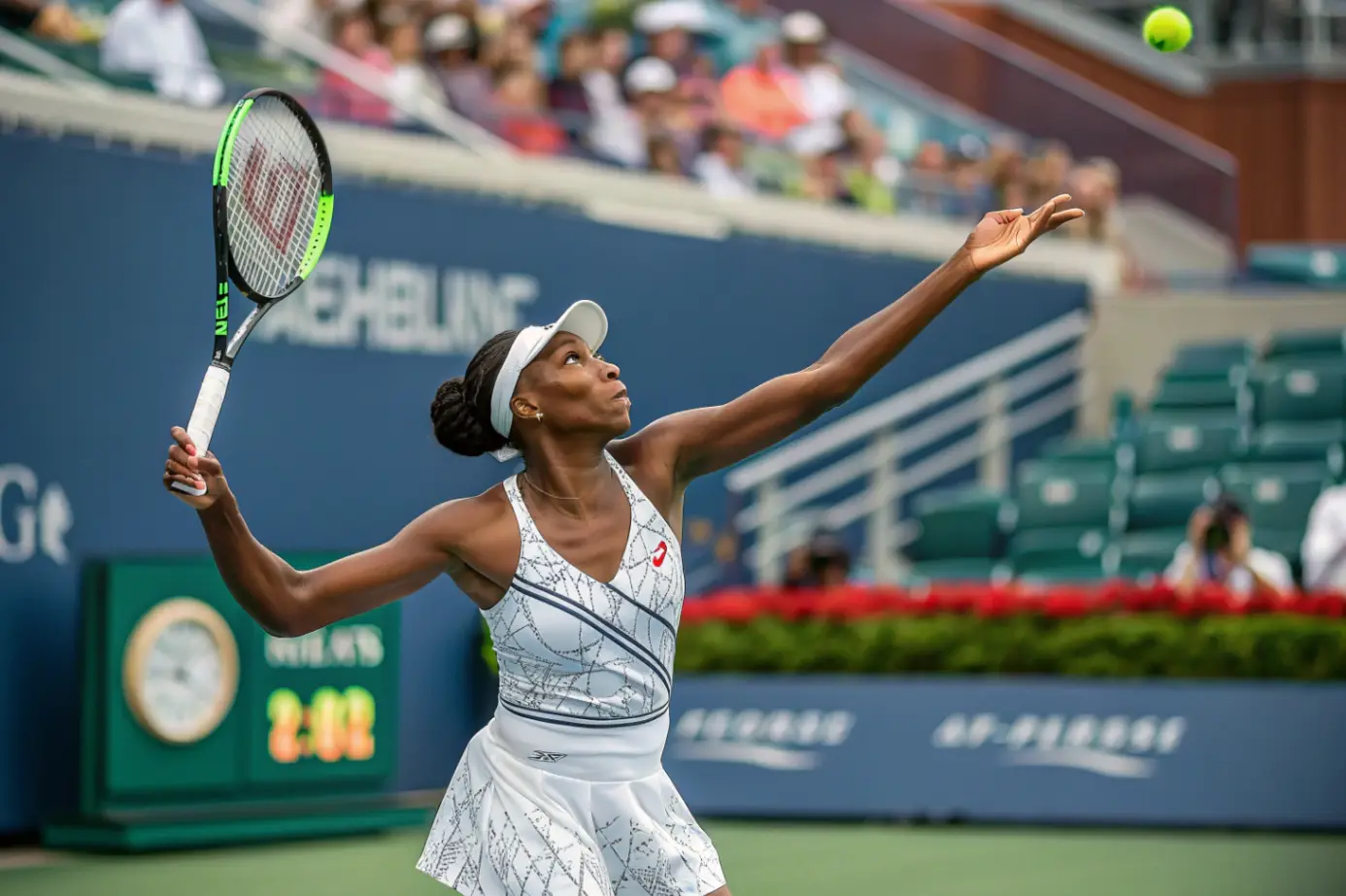
Venus Williams has never fit neatly into the timelines imposed on professional athletes. For more than two decades, she has rewritten expectations about longevity, resilience, and relevance in women’s tennis. Now, once again, her name is etched into history as the oldest player to compete and win matches on the WTA Tour in the modern era. This milestone is not just about age; it is about influence, evolution, and the enduring power of elite competition.
As Venus steps back into the spotlight, the tennis world is asking a familiar but renewed question: what does the future hold for one of the sport’s greatest pioneers?
Venus Williams and the New WTA Age Record
Venus Williams’ latest achievement goes far beyond a single match or tournament appearance. By competing on the WTA Tour at an age when most players have long since retired, she has redefined what longevity looks like in elite women’s tennis. This new age record is not an isolated anomaly but the result of years of discipline, adaptation, and an evolving understanding of athlete health and performance.
At over 40 years old, Venus Williams has managed to remain competitive in an era defined by speed, physicality, and relentless scheduling. Modern tennis demands explosive movement, heavy groundstrokes, and exceptional endurance, all of which become increasingly difficult with age. Yet Venus continues to challenge younger opponents, not by trying to outmatch them physically, but by leaning on experience, tactical intelligence, and refined technique.
This record also carries symbolic weight for the WTA Tour itself. Women’s tennis has long been associated with early peaks and relatively short careers. Venus Williams disrupts that narrative. Her presence reinforces the idea that elite performance is no longer strictly bound to youth, especially when athletes have access to advanced sports science, recovery methods, and personalized training programs.
Importantly, this milestone resonates beyond statistics. Fans, players, and analysts see in Venus a reflection of what sustained excellence looks like. Her return to competitive play at such an advanced age is not driven by nostalgia but by a continued desire to compete at the highest level. In doing so, she has expanded the boundaries of what is considered possible in professional tennis.
Career Longevity in Context: Venus Williams vs WTA History
To fully appreciate the significance of Venus Williams’ age record, it is essential to place it within the broader historical context of the WTA Tour. Women’s tennis has seen many legends, but very few have managed to compete meaningfully beyond their late thirties. Venus’ achievement stands out not only because of her age, but because of the level at which she continues to perform.
Before examining the broader implications, it helps to look at how Venus compares to other notable figures in WTA history. The table below provides a clear overview of age-related milestones among elite female tennis players.
| Player | Age at Last WTA Match | Career Span | Notable Achievements |
|---|---|---|---|
| Venus Williams | 40+ | 1994–present | 7 Grand Slam singles titles |
| Serena Williams | 40 | 1995–2022 | 23 Grand Slam singles titles |
| Martina Navratilova | 49 | 1975–2006 | 18 Grand Slam singles titles |
| Kimiko Date | 46 | 1989–2017 | WTA comeback pioneer |
| Billie Jean King | 39 | 1959–1983 | 12 Grand Slam singles titles |
This comparison highlights just how rare Venus Williams’ longevity truly is. While Martina Navratilova extended her career well into her forties, much of her later success came in doubles. Venus, by contrast, continues to test herself in singles competition, where physical demands are far more punishing.
The table also underscores a key evolution in women’s tennis. Earlier generations often faced structural limitations, including fewer resources, less advanced medical support, and cultural expectations around retirement. Venus Williams benefits from, and has helped create, an era in which female athletes are empowered to extend their careers on their own terms.
What makes Venus’ case unique is that her longevity is not the result of a single comeback but a gradual, sustained adaptation. She has adjusted her playing schedule, refined her serve and baseline game, and prioritized health management in ways that reflect a modern, holistic approach to professional sport.
How Venus Williams Redefined Longevity in Women’s Tennis
Venus Williams’ extended career did not happen by chance. It is the product of deliberate choices, personal resilience, and a willingness to evolve. Her journey offers valuable insight into how elite athletes can prolong their competitive relevance in physically demanding sports like tennis.
One of the most important factors in Venus’ longevity is her approach to adaptation. She has never relied solely on raw athleticism, even during her peak years. Instead, she built a game centered on serve efficiency, aggressive positioning, and mental dominance. As physical speed inevitably declined, these strengths became even more valuable.
Several key elements have defined Venus Williams’ ability to remain competitive at an advanced age:
- Strategic scheduling that limits overuse and reduces injury risk.
- A serve-first playing style that shortens points and conserves energy.
- Advanced recovery protocols, including physiotherapy and load management.
- Mental resilience developed through decades of elite competition.
- A deep understanding of match tactics and opponent tendencies.
This combination has allowed Venus to offset the natural disadvantages of aging. Rather than attempting to match younger players stroke for stroke, she imposes her own rhythm on matches. Her experience enables her to identify weaknesses quickly and exploit them with precision.
Equally significant is her mindset. Venus Williams has always spoken openly about playing tennis for herself, not for rankings or external validation. This intrinsic motivation has kept her engaged even during periods of injury and inconsistent results. It also allows her to approach competition with a level of freedom that younger players, under constant pressure to climb the rankings, often lack.
Her influence extends beyond her own results. Younger players now view extended careers as achievable, not exceptional. Venus has shown that with the right balance of ambition, discipline, and self-awareness, longevity can become a strategic advantage rather than a limitation.
Physical Challenges, Injuries, and Adaptation Over Time
No discussion of Venus Williams’ longevity would be complete without acknowledging the physical challenges she has faced. Throughout her career, she has dealt with injuries that would have ended many athletes’ competitive ambitions. Perhaps most notably, her diagnosis with Sjögren’s syndrome forced her to fundamentally rethink how she trained, recovered, and competed.
Sjögren’s syndrome, an autoimmune condition that causes fatigue and joint pain, presented Venus with an unprecedented obstacle. Instead of stepping away from the sport, she adapted. She learned to listen closely to her body, adjust her training intensity, and prioritize recovery in ways that preserved her long-term health.
This period marked a turning point in her career. Venus became an advocate for smarter training methods, emphasizing quality over quantity. Her experience highlighted the importance of individualized athlete care, especially for players managing chronic conditions.
In practical terms, adaptation meant fewer tournaments, more selective scheduling, and a greater focus on maintaining peak condition for specific events. It also involved technical refinements, such as improving serve placement and reducing unnecessary movement during rallies.
The broader significance of this evolution cannot be overstated. Venus Williams helped normalize conversations around athlete health in women’s tennis. She demonstrated that managing physical limitations transparently and intelligently does not diminish competitiveness; instead, it can extend careers and enhance performance sustainability.
Her ability to remain active on the WTA Tour despite these challenges speaks to a level of professionalism and self-awareness that few athletes achieve. It also reinforces the idea that longevity is not about avoiding adversity, but about responding to it effectively.
Cultural Impact and Influence on the Next Generation
Venus Williams’ age record resonates far beyond the boundaries of tennis statistics. Culturally, her continued presence on the WTA Tour challenges deeply ingrained assumptions about age, gender, and athletic relevance. She has become a symbol of longevity not just in sport, but in professional life more broadly.
For younger players, Venus represents a living blueprint for sustainable success. She embodies the idea that careers can evolve in phases, each defined by different priorities and strengths. Early dominance can give way to tactical mastery, while physical decline can be balanced by experience and mental acuity.
Her influence is especially pronounced among players who view tennis as a long-term pursuit rather than a short-lived sprint. Venus’ career suggests that success does not have to be compressed into a narrow window. Instead, it can be distributed across decades, with each chapter offering new forms of achievement.
Off the court, Venus Williams has also redefined what it means to be a modern athlete. Her involvement in business, fashion, and advocacy has shown that professional players can build multidimensional identities. This broader perspective may be one reason she continues to approach tennis with enthusiasm rather than burnout.
The cultural significance of her longevity extends to fans as well. For many, watching Venus compete is a reminder that excellence does not expire. Her matches attract attention not because of novelty, but because of respect for a career built on consistency, courage, and reinvention.
What Venus Williams’ Record Means for the WTA Tour
From an institutional perspective, Venus Williams’ age record carries important implications for the future of the WTA Tour. Her continued participation highlights shifts in how the sport understands athlete development, peak performance, and career sustainability.
The WTA has increasingly emphasized player welfare, scheduling flexibility, and medical support. Venus’ longevity validates these efforts. It demonstrates that when athletes are supported holistically, they can remain competitive well beyond traditional expectations.
Her presence also adds narrative depth to tournaments. Matches involving Venus are not just contests between players; they are intergenerational encounters that connect different eras of the sport. This dynamic enriches the viewing experience and strengthens the WTA’s storytelling potential.
Commercially, Venus Williams remains a valuable figure. Her brand recognition transcends rankings and results. Sponsors, broadcasters, and organizers benefit from her continued visibility, which bridges the gap between longtime fans and newer audiences.
Perhaps most importantly, her record encourages institutional reflection. If one player can sustain such a long career, what systemic changes can help others do the same? Venus’ example may influence future policies related to scheduling, recovery, and career planning across the tour.
What Comes Next for Venus Williams
Speculation about Venus Williams’ future has followed her for years, yet she continues to defy definitive predictions. Rather than announcing grand plans or final chapters, she has consistently chosen to let her actions speak. This approach suggests that whatever comes next will be guided by the same principles that have defined her career so far.
In the short term, Venus is likely to remain selective about her tournament appearances. Quality, not quantity, will shape her schedule. Each match represents an opportunity to compete, inspire, and test herself against the evolving standards of the WTA Tour.
Longer term, her influence may shift increasingly toward mentorship and legacy-building. Even while active, Venus already serves as an informal reference point for professionalism and longevity. A future role in coaching, advisory work, or player advocacy would be a natural extension of her impact.
Yet it would be a mistake to frame her future solely in terms of transition or retirement. Venus Williams has never followed expected timelines. As long as she continues to find meaning and motivation in competition, her presence on court remains entirely consistent with her career narrative.
What is certain is that her age record is not an endpoint. It is another chapter in a story defined by resilience, reinvention, and an unwavering belief in possibility.
Conclusion
Venus Williams’ latest milestone is more than a record; it is a statement. By continuing to compete on the WTA Tour at an unprecedented age, she has reshaped how tennis understands longevity, excellence, and ambition. Her journey reflects the evolution of women’s sport itself, from rigid expectations to expansive possibilities.
As fans and analysts look ahead, one thing remains clear. Venus Williams is not simply extending her career; she is expanding the boundaries of what a career in women’s tennis can be. Whether her next chapter includes more matches, mentorship, or new ventures, her influence on the sport is already secure.
Her story reminds us that greatness is not confined to youth, and that history can always be rewritten by those willing to challenge its assumptions.