
Mirra Andreeva Reaches The Roland Garros 2026 Final: The Tournament’s Biggest Surprise
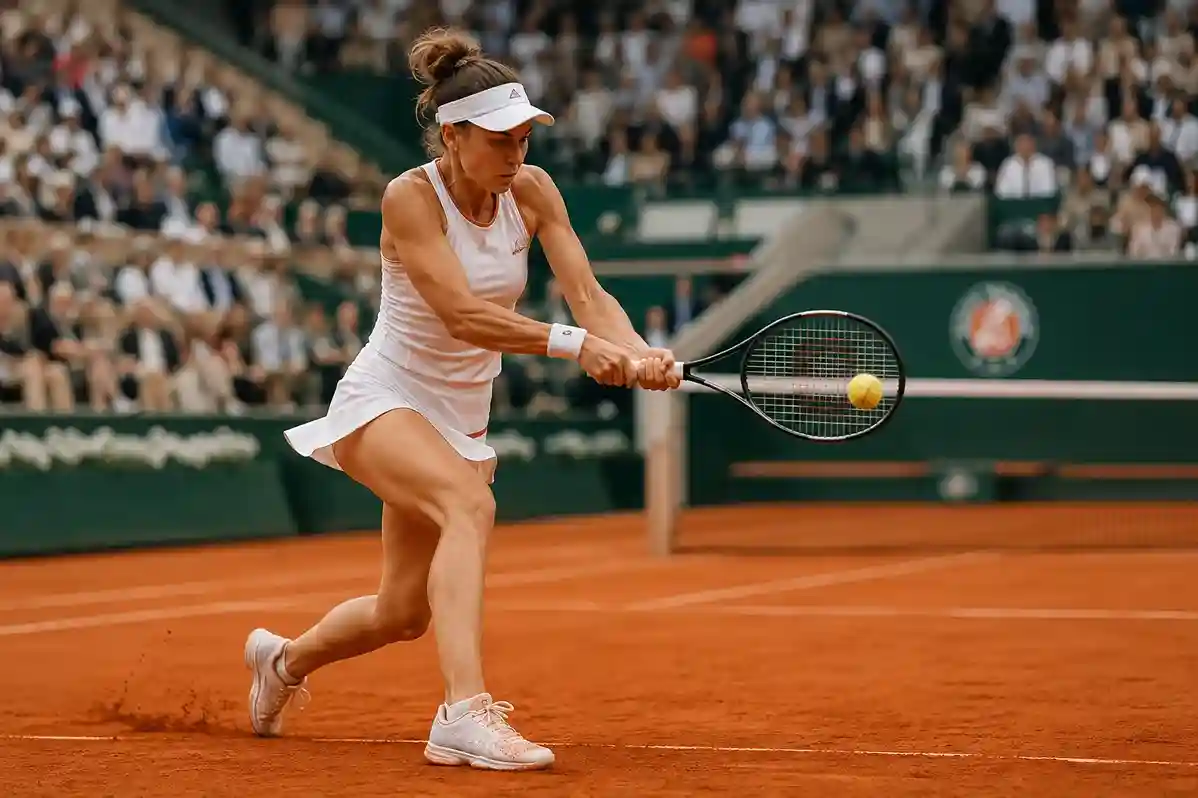
Mirra Andreeva’s run to the 2026 Roland Garros final feels like the moment when promise turned into proof. She did not sneak through the draw on nerves and luck. She arrived in Paris as the No. 8 seed, already respected on clay, and then played with the calm, clarity, and control of someone who had decided the future was no longer something to wait for. Her semifinal win over Marta Kostyuk, 6-1, 6-3, put her into her first Grand Slam final, while the official tournament site and WTA coverage confirmed that this is her second Roland Garros semifinal in three appearances and her first major final overall.
That is why this story has landed with such force. Roland Garros is not a tournament that hands out miracles lightly. Clay asks every serious question a tennis player can face: movement, patience, balance, shot tolerance, tactical maturity, emotional discipline. Andreeva has answered all of them over the last two weeks with a level of composure that looks far older than 19. The scale of the surprise is not that she is talented. Everyone knew that. The real surprise is how quickly she has turned elite potential into a championship-level campaign on one of the sport’s hardest stages.
Why This Run Feels Bigger Than A Normal Breakthrough
A young player reaching a major final is always a story, but Andreeva’s Paris run carries extra weight because it has happened in a draw that refused to follow old scripts. The women’s event was already wide open after major names fell away, including Iga Swiatek, and the tournament was guaranteed to crown a new women’s champion. In that kind of field, plenty of players can sense opportunity; very few know how to control it. Andreeva has done exactly that. She has looked less like a teenager enjoying a hot fortnight and more like a player learning how to dictate a tournament from the baseline.
Her rise was not built in a vacuum. Before Paris, WTA coverage noted that Andreeva had already become one of the tour’s most reliable forces on clay, bringing a tour-leading win total into the event’s second week. The official Roland Garros site described her as the world’s top-ranked teenager when she reached the semifinals, and WTA player data lists her as 19 years old with a career-high singles ranking of No. 5. Those details matter because they show that this final is not a random explosion from nowhere. It is the logical acceleration of a player who has been gathering results, sharpening decision-making, and growing more dangerous with every major appearance.
What makes the run feel bigger than a standard “next big thing” headline is the way she has done it. Andreeva has not depended on frantic defense or streaky hitting. She has won with structure. Her court position has been smart, her point construction clean, and her changes of direction have come at the right moment rather than out of impatience. On clay, that matters more than highlight-reel shotmaking. Paris rewards players who can build a point in layers, keep the ball heavy and deep, and stay emotionally balanced when matches shift. Andreeva has looked strikingly comfortable in that environment.
How She Played Her Way Through Paris
The official Roland Garros coverage shows a tournament path that became more convincing with every round. She opened by beating Fiona Ferro, then moved past Cristina Bucsa and Marie Bouzkova to reach the second week. From there, she dismissed Jil Teichmann, advanced through a quarterfinal against Sorana Cirstea, and then beat Marta Kostyuk in the semifinals to seal her place in the final. The deeper she went, the clearer the pattern became: Andreeva was not merely surviving matches, she was imposing her rhythm on them.
Before looking at the wider meaning of her run, it helps to see how efficiently she navigated the draw in Paris. The sequence of opponents and scorelines makes the consistency of her level much easier to appreciate.
| Round | Opponent | Result |
|---|---|---|
| First round | Fiona Ferro | Won 6-3, 6-3 |
| Second round | Cristina Bucsa | Won 6-2, 6-4 |
| Third round | Marie Bouzkova | Won 6-2, 6-3 |
| Fourth round | Jil Teichmann | Won 6-3, 6-2 |
| Quarterfinal | Sorana Cirstea | Won 6-3, 1-0 ret. |
| Semifinal | Marta Kostyuk | Won 6-1, 6-3 |
Seen together, those results underline how little chaos there has been in her fortnight. There were no draining three-set escapes in the decisive stages, no sense that she was hanging on while opponents played below their level. Even the semifinal, which had emotional tension because of the political background around a Russian-Ukrainian meeting, lasted only 76 minutes. According to AP and the official match page, Andreeva was sharp from the start and ended Kostyuk’s 16-match clay-court winning streak. That kind of control is usually the sign of a player arriving ahead of schedule.
The Semifinal That Changed Her Status
Reaching a semifinal can still leave room for doubt. Reaching a final tends to end the debate. That is what happened on June 4. Kostyuk came into the match in excellent form, and AP noted that she had arrived in Paris on a 16-match clay winning streak after titles in Madrid and Rouen. She also carried the emotional momentum of a headline victory over four-time champion Iga Swiatek earlier in the tournament. Beating that version of Kostyuk in straight sets was not just another good win. It was the kind of performance that changes how the whole tour sees a player.
The scoreboard tells one story, but the shape of the match tells a more important one. Andreeva took time away without rushing. She redirected the ball with confidence, got into attacking court positions early, and prevented Kostyuk from turning the baseline exchanges into the kind of physical contest that can swing a clay match. The official Roland Garros result page records the 6-1, 6-3 scoreline, while AP described Andreeva afterward as saying she felt especially focused and happy with her level. Those details line up with what the match looked like: she played with the conviction of someone who had already seen the path to the finish before the first ball was struck.
A few elements stood out in that semifinal and help explain why this run feels so significant.
- She started aggressively without giving the match away in search of quick winners.
- She held her shape from the baseline and rarely let Kostyuk dictate with first-strike tennis.
- She looked emotionally settled even when the atmosphere turned tense.
- She protected her own service games well enough to keep the pressure moving in one direction.
- She played the big points as if the occasion belonged to her.
Those qualities are more important than raw power in a Paris final run. Plenty of young players can hit through a couple of rounds. Far fewer can control tempo, absorb noise, and still make clean choices under the pressure of a major semifinal. That is where Andreeva looked different. She was not simply reacting to the moment. She was shaping it.
Why Clay Brings Out The Best In Her
Andreeva’s game makes sense on clay in a way that feels deeply natural. She is not only comfortable sliding and defending; she understands how to use the surface as a tactical partner. Her movement lets her recover quickly after changing direction. Her backhand stays compact under pressure. Her rally tolerance means she can stretch points without losing quality. When she chooses to attack, it tends to come off a well-built pattern rather than an impulsive gamble. That is a sophisticated profile for a teenager, and it is one reason Roland Garros has already become her most convincing major. The official tournament site notes that she was a semifinalist here in 2024 and has now reached the final in 2026.
WTA reporting earlier in the event also pointed to the numbers behind that fit. Before the second week, Andreeva had already collected a tour-leading total of wins in 2026 and led the tour in clay-court victories as well. Those facts matter because they frame this final not as a short burst but as the strongest continuation of a broader season trend. Players do not accidentally become one of the year’s most effective clay performers. That takes scheduling discipline, physical growth, and the willingness to build points the hard way.
There is also something mature in the way she balances patience and ambition. Many gifted teenagers either wait too long to attack or try to end rallies too quickly. Andreeva seems to understand the middle ground. She can live in long exchanges, yet she is alert to the first short ball. She changes direction down the line at useful moments rather than for decoration. She does not need every point to become a statement. Over two weeks in Paris, that has looked less like youthful fearlessness and more like advanced match intelligence.
The Final Against Maja Chwalinska And What It Means
The final itself adds another unusual layer to the story. Andreeva will face Maja Chwalinska, the Polish qualifier whose own run has become one of the most unlikely stories of the event. AP reported that Chwalinska became only the second qualifier in the Open Era to reach a major final after Emma Raducanu’s 2021 US Open title run, and WTA described the championship match as a meeting between two first-time Grand Slam finalists. That makes the 2026 women’s final extraordinary even by the standards of a sport that constantly refreshes itself.
For Andreeva, though, the meaning goes beyond the specific opponent. Reaching this final changes her place in the sport even before the first championship ball is struck. She is no longer just a brilliant young player with a fast-rising ranking and a major future. She is now a player who has walked all the way to the last Saturday of Roland Garros and done it by beating high-level opponents with authority. Whether she lifts the trophy or not, the discussion around her career has shifted. The question is no longer whether she can become a serious title contender at majors. She already is one.
This final also says something important about the women’s game. It is in a period where depth, surface versatility, and emotional resilience matter as much as star reputation. That creates room for players like Andreeva to rise quickly if they are complete enough. She has used that opening better than almost anyone. Her run has been bold without being reckless, stylish without becoming showy, and efficient without losing its personality. In a tournament full of surprises, she has become the story that feels most likely to matter long after this fortnight ends.
A Star Turn That Feels Real, Not Sudden
The easiest mistake with a breakthrough like this is to call it a shock and stop there. Surprise is part of the truth, but it is not the whole truth. Andreeva’s emergence in Paris is surprising mainly because elite tennis usually asks young players to wait. It asks them to lose a few quarterfinals, misread a few big moments, and spend a little more time learning how to carry expectation. She seems to be compressing that timeline. The final is startling, but the quality of her tennis explains it. That is what gives the run substance.
There is still a title match to play, and finals have their own weather, their own nerves, their own private logic. Yet whatever happens against Chwalinska, Roland Garros 2026 has already delivered a clear verdict on Mirra Andreeva. She belongs on this stage. She belongs deep in this tournament. And she has reached the point in her development where the biggest events in the sport no longer feel like places she visits for experience. They feel like places she can win.